
Don DeLillo, Great Jones Street
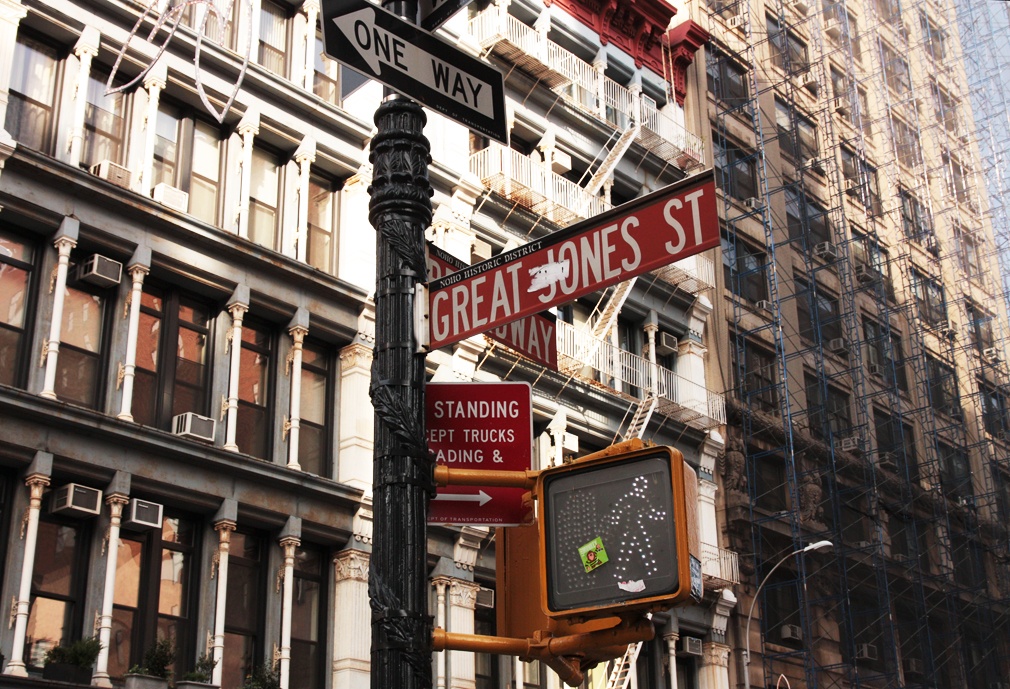
Question 1 : 250 words
In “Parody, Heteroglossia, and Chronotope in Don DeLillo’s Great Jones Street,” critic Robert E. Kohn describes the concept of the “chronotope” by Russian theorist Mikhail Bakhtin:
Bakhtin’s [describes] “literary artistic chronotope,” in which “spatial and temporal indicators are fused into one carefully thought-out, concrete whole,” time “thickens, takes on flesh, becomes artistically visible,” and “space becomes charged and responsive to the movements of time, plot and history” (84).
Kohn then writes:
The sense of time in Great Jones Street is ambiguous or vague, sometimes reading “as if it has no duration” (Bakhtin 248). Bucky is “never sure of time while [Opel] was there,” and speaks of “the crisis inherent in time” and how “[e]ach day passed, detached from time” (55, 56). The word “ timeless” appears at least three times within ten pages (62, 67, 71). Bucky has had “the feeling that time is stretchable,” that “time did not seem to pass as much as build, slowly gathering weight,” and has sensed “the perilous context of time” (121, 126, 136). It is not clear what DeLillo meant when he told [an interviewer] LeClair that “Great Jones Street bends back on itself,” but this may explain the enigma surrounding the tapes of “The Mountain Tapes,” which appear to have been written after Bucky’s voicelessness, though he claims to have taped them “fourteen months earlier,” when Opel was still alive (147). His lack of surprise when Opel dies in the apartment is so unexpected that the reader may wonder whether he had already experienced her death. It is well known that Albert Einstein proved that space bends around anything that has mass. Perhaps Great Jones Street bends back upon itself in such a way that incidents from the future tangibly intersect the present. There is the kind of ontological uncertainty in the temporal progression of Great Jones Street that, for Brian McHale, is the hallmark of postmodernist fiction.
How do you see this “chronotope” played out in DeLillo’s novel? Why would DeLillo write a novel in which time and space collapse, and how does this play into the story itself?
Question 2 : 150 words
The critic Jesse Kavadlo notes in his essay “The Terms of the Contract: Rock and Roll and the Narrative of Self-Destruction in DonDeLillo, Neal Pollack, and Kurt Cobain,” that Great Jones Street wasn’t particularly well received:
New York Times book critic Christopher Lehmann-Haupt, DeLillo’s biggest supporter for previous efforts Americana and End Zone, called the book “sophomoric,” explaining that “a thousand gags do not a novel make” (36). But Lehmann-Haupt’s secondary objection is equally significant: “the world of rock simply doesn’t lend itself to verbal parody…. Who (or rather who over the age of 30) can tell the difference between [DeLillo’s] lyrics and the songs they are supposed to be satirizing?” (35). Decades later, Anthony DeCurtis, another DeLillo booster, echoed Lehmann-Haupt’s complaint: “When I read [a passage from Great Jones Street] to a friend of mine—a friend who is, like me, a rock fan and a reader—he said, ‘That’s exactly what a writer would think a rock star thinks like.’ He wasn’t being complimentary” (132).
Do you think this portrayal of a rock star is accurate or inaccurate? What did you think of DeLillo’s lyrics? Please be sure to quote from the text!
John Cassavetes
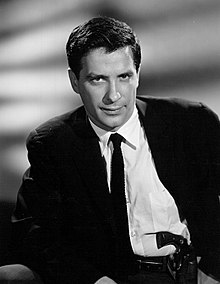
Write about 400 words discussing the films of John Cassavetes in relationship to the novels we have read so far. In particular, think of how Cassavetes handles human emotion (obviously under the influence of drugs and alcohol) and how that influences the way the movies are plotted (if they are plotted at all). What do you think is the overriding concern of Cassavetes when he makes a movie? Does his methods (which are very actor-oriented) allow him to do things in his films that we don’t see in Hollywood films? As with Selby, do you get the sense that he likes his characters (i.e. is he being purely critical when he shows them doing unpleasant things)? Try to mention a movie you’ve seen that you think was influenced by this style of filmmaking.
Junkie & Last Exit to Brooklyn
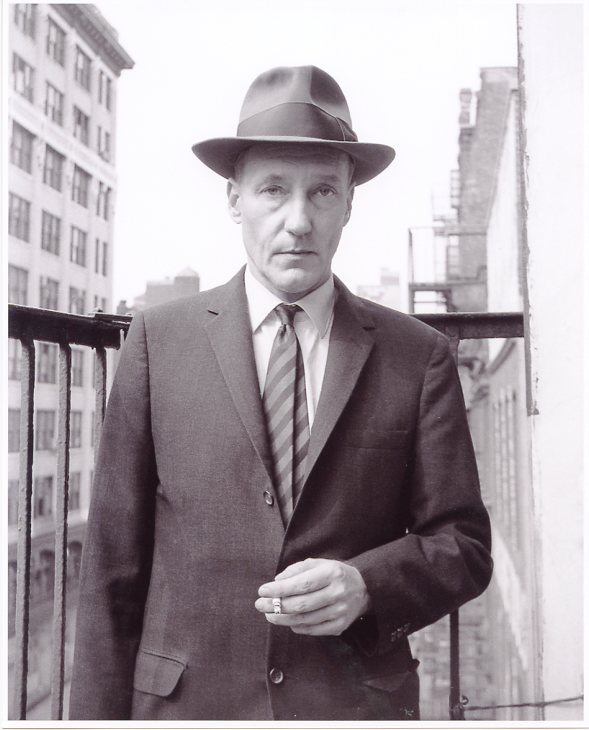
Write comments, about 400 words total, about the following:
1. In Junkie, Burroughs has a distinct way of describing the appearances of people, namely their faces but also bodies, and of describing the physical effects of drugs as if there were other elements playing a role, be these viruses, animals or even aliens, Pick an example of Burroughs’s physical descriptions (both internal and external) and write a bit about how this reflects his general approach.
2. Last Exit to Brooklyn seems at times to be a description of hell. Humans seem incapable of achieving anything or even knowing what their true desires are. Somehow (to my mind, at least), Selby still suggests that love is a driving force in people, even if it often leads to their downfall. Pick a character from the novel and write a bit about how love survives (or doesn’t survive) in this character’s story.
Amiri Baraka on the Background of Dutchman
Baraka reading “Dope.”
Dutchman (1967)
LeRoi Jones / Amiri Baraka
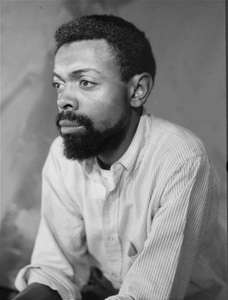
Write a short 400 or so word comment on the play Dutchman, paying particular attention to the long monologue at the end (starting on page 8) and how it relates to Baraka’s notions of music and culture in the selections from Blues People. Much of Larry Neal’s essay on the Black Arts Movement also deals with Amiri Baraka (then LeRoi Jones)’s work. What kind of distinction is Neal drawing between “protest poetry” and what he and Baraka are after? How does Dutchman relate to these notions?
Please remember to quote from the text! There’s also a selection of Baraka’s poems in the drive that I’d like you to read.
Frank O’Hara and Allen Ginsberg

Here are some questions I’d like you to consider for tomorrow’s class. Of course, read all of the poems closely at least two or three times (there aren’t that many). Write a few reflections on the questions below in the comments of this post (I will have to accept the comment the first time, but after that, you should be able to comment freely). You don’t have to answer every question below, just use them to guide your thoughts.
1. Write about Frank O’Hara’s “manifesto” Personism (included in the file) in relation to “Having a Coke With You.” How serious is O’Hara in this manifesto? What is it like to write a poem to exactly one person?
2. Looking at the draft version of “Howl” and the finished version, what do you think guided some of his decisions? Or does it seem arbitrary? Did the poem change much when he changed the lineation? What do you learn by looking at an early draft of a poem?
 New York Underground in Film, Music and Literature 1955-85