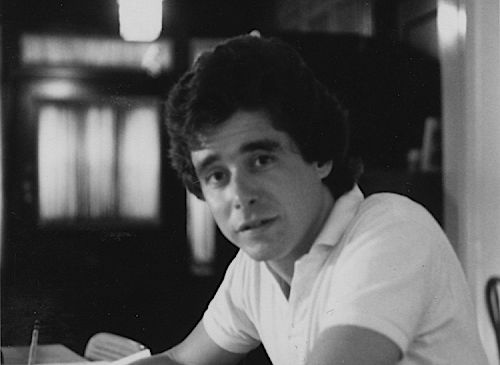
Close to the Knives, David Wojnarowicz

David Wojnarowicz

The artist / writer David Wojnarowicz is a representative of a turning point in gay culture: the moment when gay activism emerged out of the AIDS crisis. He points back to some of the writers we have read starting with O’Hara and Baraka (in his run-on, associative sentences), Burroughs, Selby and Carroll (in his gritty, sometimes vulgar realism), and punk. Write about 300-words describing his unique contribution to the “underground” tradition we have been investigating.

Bright Lights, Big City, Jay McInerney

Drugs clearly plays a different role in Bright Lights, Big City than in any of the earlier works we’ve read. New York itself appears in a very different guise (and in this case, not from an “underground” writer, or even a marginalized writer). Write about 300 words about McInerney’s book, particularly about the drug use (and the different drugs) but also as a portrait of New York. You should be sure to quote from some of the earlier books to make your points clear.

The Birth of Punk

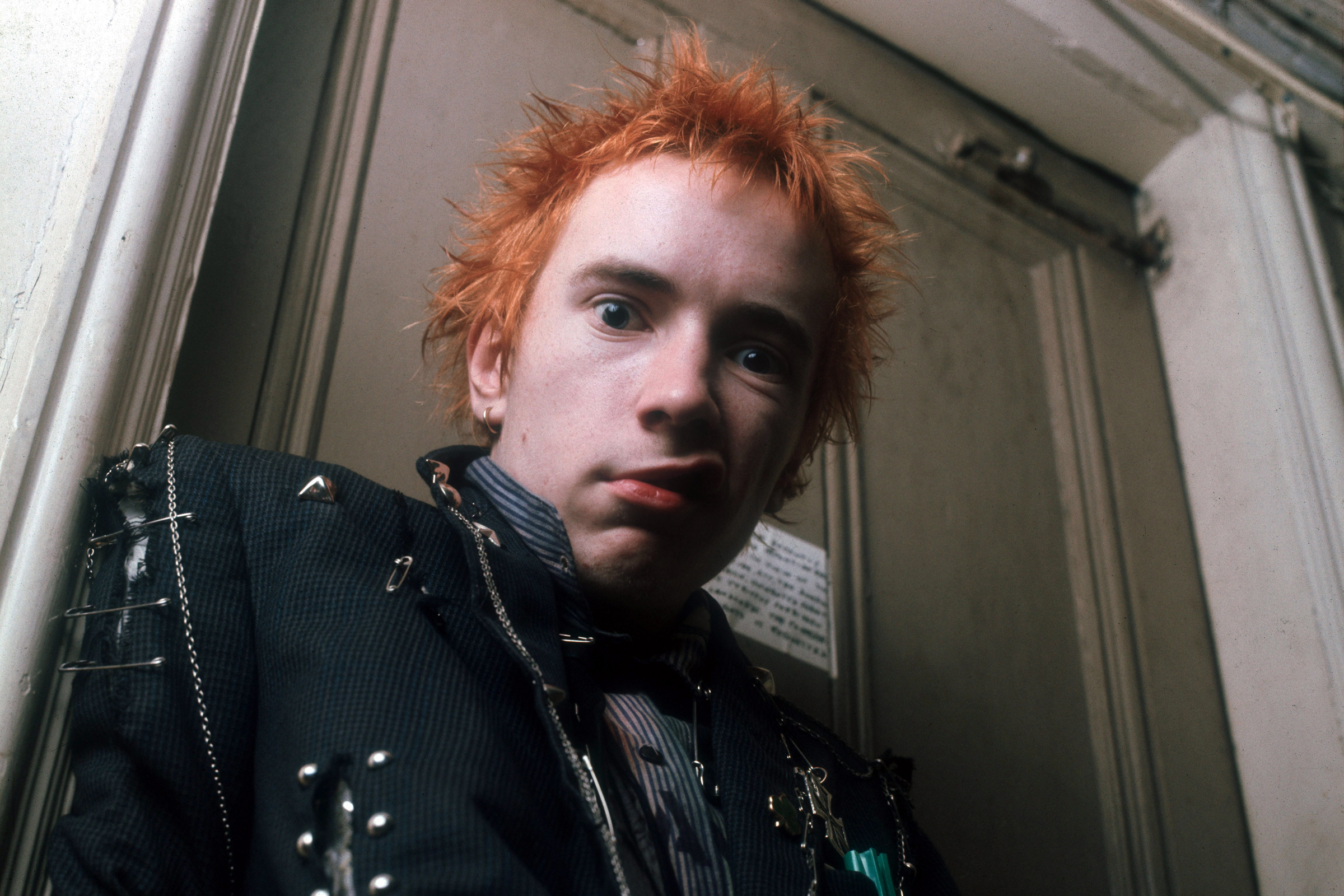
Mandatory Credit: Photo by Ray Stevenson/REX/Shutterstock (581295gs)
Sex Pistols – Johnny Rotten outside Glitterbest office

The Sex Pistols meant to bring the edge into view, and they did: when Johnny Rotten rolled his r’s, it sounded as if his teeth had been filed down to points.

Positing boredom as the legacy of rock, and spiritual death as the promise of the welfare state, punk triumphed over its vi­sions of ugliness—mastered them—by acting them out. Insisting on the bizarre and trashing standards of decency, punk shat­tered the mask of the dominant culture; by its very unnatural­ness, punk made the host culture seem like a trick, the result of sadomasochistic economics. With cruelly dyed and slashed hair, mutilated faces, bondage gear (from McLaren’s shelves, of course, which was only fair), wrecked clothes—a lumpen, day-­for-night-of-the-living-dead style—punk drew lines, divided the young from the old and the young from the young, forced new loyalties, forged new identities, and, as it announced that all possibilities were closed, opened up possibilities of negation and affirmation that a year before had not existed even as fantasies. This was revolt into style; it was also style into revolt. Centered strictly in London, later spreading directly across the U.K., punk’s claim on the world’s attention was not hedged: music­ally and politically it announced itself as a harbinger of things to come, of all that was feared and of all that could not even be imagined.

Greil Marcus, Punk (1979)

After listening to the YouTube tracklist, write about 300 words on what you think made punk distinctive as a musical and social movement. Try to avoid the obvious, which is that punk was “angry” or “loud” for example, and try instead to pick out specific lyrics, parts of songs and quotes from Please Kill Me to help you make your point. The quotes from Greil Marcus above give you a sense of how one person interpreted the music (you can quote from the Marcus article, also). Things to think about (you don’t have to answer all of these): Was there a vulnerable side to punk? Could their “politics” be taken seriously? How does the expression of pure negativity work as a political position? How did the punk bands relate to earlier bands (The Velvet Underground, the New York Dolls) on the tracklist? Would bands be able to make music like this today and reach the wider public?

Taxi Driver

Patricia Patterson and Manny Farber write in “The Power and the Gory: Taxi Driver”:

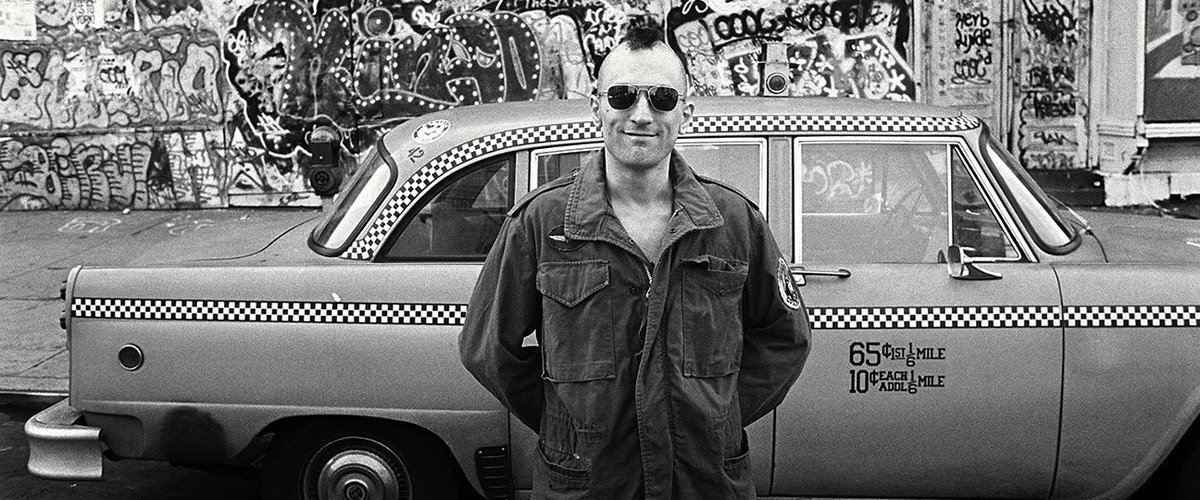
The fact is that, unlike the unrelentingly presented worm in Dostoevski’s Underground Man, this handsome hackie [Travis Bickle] is set up as lean and independent, an appealing innocent. The extent of his sexism and racism is hedged. While Travis stares at a night world of black pimps and whores, all the racial slurs come from fellow whites. In fact, Travis tries to pick up a mulatto candy seller in an interesting porno-theater scene. He tries to joke with this bored, rather pretty but definitely uninterested popcorn girl who’s reading a fan mag, and she calls the manager. De Niro, giving up quickly and furtively switching to buying candy, creates a telling poetic ambience (Si. 87: “gimme some Chuckles … and some jujus, they last longer … some pop- corn and some Coke”). 

There’s dubious indication that the cabbie is a woman-hater, but the film is a barrage of cheapened sex washing over a graceful nobody who is basically a receiver rather than a giver. It’s not Travis who talks about blowing a woman’s pussy with a .44 Magnum; nor is it Travis who speaks as the patently insincere voiceover in a porno (“Ooh, that’s a big one, I’d like some of that”); nor is Travis talking about a hot customer who changed pantyhose on the Triboro Bridge. 

How are we to understand Travis in relation to his world? Is he an “innocent”? Yes, he rescues a 12-year old prostitute, but what other “crimes,” if any, is he addressing? Does he have a moral core? Or is it all in his head, some inner rage driving him to reject, or to take on, the world? Be sure to quote from the film, either dialogue or detailed description of a scene. 300 words. 

Jim Carroll

Jim Carroll

Brian James Schill writes in “Departure in New Noise: Punk Poetry”:

As their repeated references to Rimbaud suggest, then, there is much in the French poet’s style, philosophy, and experience with which punks and postpunks identify. Rimbaud is in many ways punk’s intellectual godfather and elemental versifier. Punks see in the writer who had renounced his own calling and once claimed, “Morality is the weakness of the brain,” a template for their own rejection of authority and history, their violent détournement of art and pop in the service of prophecy, sneering through performances with a vulgar, self-consciously naive pessimism and contentious repudiation of self, family, God, and country typified by punk missiles from [the Sex Pistol’s] “God Save the Queen” to [Nirvana’s] “Smells Like Teen Spirit” to Green Day’s “Good Riddance (Time of Your Life),” the last of which remains an absolute… denunciation of the band’s own audience and history. In such songs, punks, many of whom continue to have nothing to lose, too play the assassins Rimbaud references in “Morning of Drunkenness,” conspiring through narrow eyes and on behalf of an invisible crowd to scrawl, “We have faith in the poison. We know how to give up our entire life day after day.” Targeting progenitors of all types and abilities and injecting into pop a bitter venom that would reveal the emperor’s nakedness through a certain electrolysis—coarse hair dropping off in clumps—punks worldwide, Carroll, Clarke, Childish, Exene Cervenka, Lydia Lunch, and Lyxzén demonstrate and continue to see theirs as the time of the assassins, a time whose idols and architects deserve to be not only exposed but put down.

Is there a way we can read The Basketball Diaries as related to Rimbaud’s “Letter of the Seer”? Would Carroll agree with the sentiment “Morality is a weakness of the brain”? Or does Carroll, like Travis Bickle in Taxi Driver, provide something like a “moral core” (even if quite deranged) to his story?

While The Basketball Diaries is not poetry, isolate some instances — good lines, paragraphs, etc. — that demonstrate Carroll’s style at its best, but be sure also to quote from the “Letter of the Seer” which I handed out and is in a PDF in the Google drive. 300 words. 

Fast Speaking Women

Reading and viewing:

Selected Patti Smith videos (interviews, performances, influences) and lyrics (PDF)

Selected Anne Waldman videos (you don’t have to watch all of the Ted Berrigan one)

Anne Waldman poems:

  • “Fast Speaking Woman”
  • “Battery”
  • “Pressure”
  • “Lady Tactics”
  • “Notorious”
  • “Musical Garden”
  • “Empty Speech”
  • “Queer Heart”
  • “Light & Shadow”
  • “& Sleep, the Lazy Owl of Night”

Anne Waldman essays:

  • “Fast Speaking Woman and the Dakini Principle”
  • “I is an Other: Dissipative Structures”

Joe Brainard, “I Remember” (pdf)

Question 1 : 300 words

Anne Waldman and Patti Smith (in her interview) seem to describe very different views of what they think a poet is or should be, though they share an affinity for Arthur Rimbaud and several Modernists (such as Celine and Cendrars among many others). They also, obviously, have very different performance styles. Using (and quoting from) Waldman’s essay “Dissipative Structures,” write a few thoughts on how you feel Waldman’s and Smith’s poetry relates to aspects of ritual, the self, the body, and so forth, as Waldman describes. Pick lines from their writing (or moments in their performances) that you think embodies this. Be sure to point out moments where you think they diverge, particularly in how they express their feelings about society, values and a new of image of the female artist. 

Question 2 : 150 Words

How do you think Patti Smith and her band transformed songs such as “Gloria” and “Land of a Thousand Dances”? Why did she base her songs on these hit tunes? Is there a way that she is trying to destroy the tunes (like she seems to want to destroy certain values)?

Question 3 : 150 words

Thinking backwards to Frank O’Hara and Allen Ginsberg, is there a connection you can see to what they were doing (formally, in terms of content, the views they express) in their poetry and what Ann Waldman, Joe Brainard, Bernadette Mayer (and if you want, Ted Berrigan) are doing in theirs? Is there some way to generalize what a “2nd Generation New York School Poet” likes to do?